As Vermont compost piles get turned over and worked into this year’s home gardens, the Vermont Agency of Natural Resources and Vermont Foodbank are calling attention to the importance of feeding people before feeding the soil.
Studies have found that people feel less guilty about wasting food when they compost it. Building soil and keeping food out of the trash are key strategies, but it is much better to keep food from going bad in the first place.
 Wasted food is a significant component of landfill waste in Vermont and the US. In 2023, a study by MSW Consultants found that 19% of all trash in Vermont (by weight) was food waste. With two in five Vermonters experiencing food insecurity in a given year, reducing food waste has the potential to measurably improve food security. Experts suggest that reducing food loss by 15% would provide enough food for more than 25 million Americans every year.
“Many Vermonters have composted for decades,” says Vermont Department of Environmental Conservation Commissioner Misty Sinsigalli, “but the Universal Recycling Law took this culture of composting a step further and banned food scraps from the trash for all Vermonters.” This food scrap ban was part of the Universal Recycling Law (Act 148) and was phased in between 2016 and 2020.
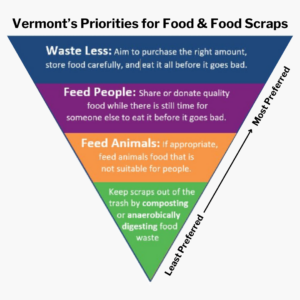
The Universal Recycling Law also launched priorities for food scraps to highlight the importance of wasting less in the first place: feeding people, and then feeding animals, above composting. In part due to these priorities, Vermont Foodbank donations tripled from 2014 to 2017 and there was a 15% decrease in per capita food disposal (pounds per person per year) between 2017 and 2023.
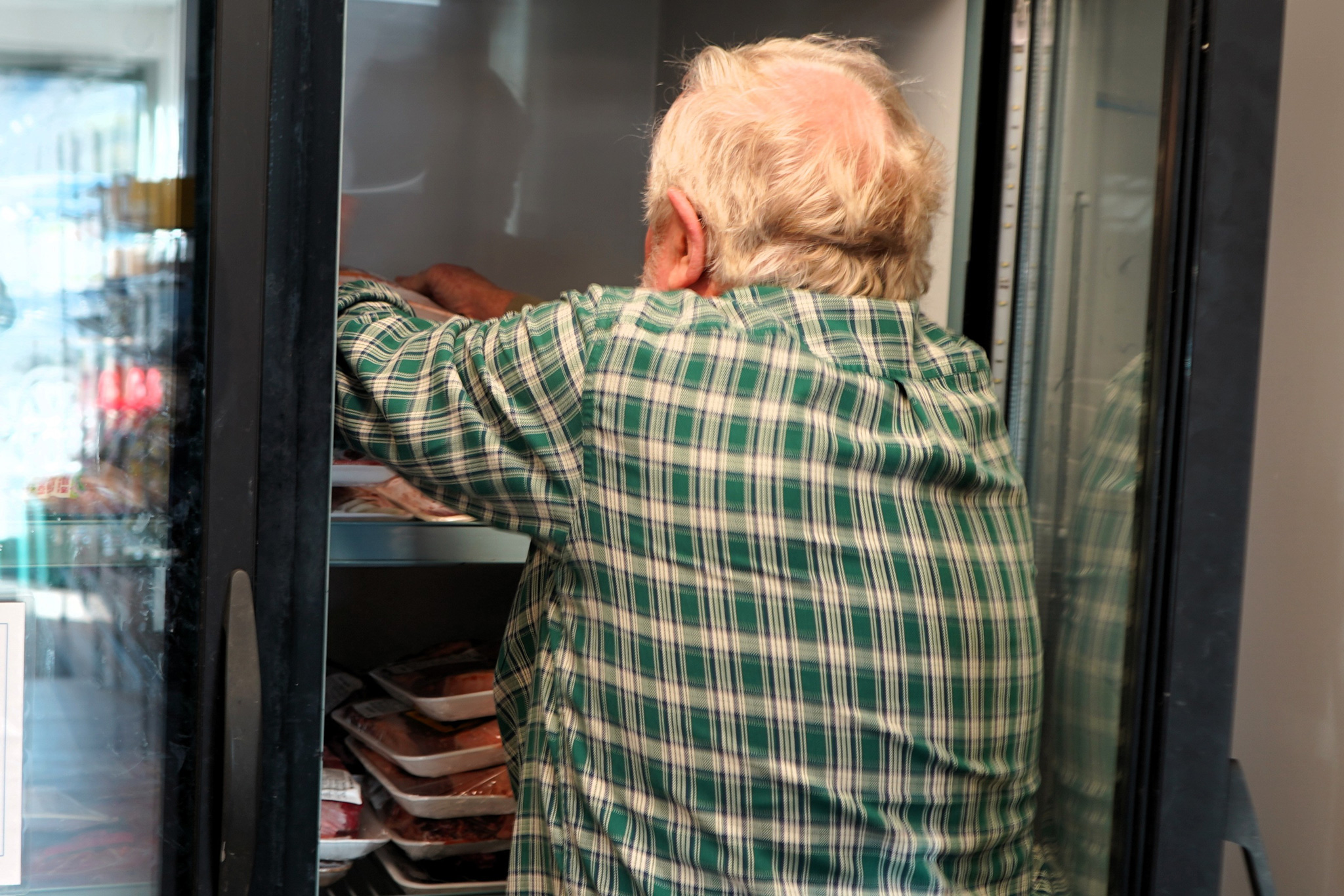
Vermont Foodbank is working with businesses to divert good food from the waste stream through its statewide Fresh Rescue program. In the past year, 170 food retailers have sent 3.7 million pounds of food that is good to eat but unlikely to sell to Vermont Foodbank’s network of food shelves and meal sites. Fresh foods including produce, meat, dairy, bread and prepared foods get routed every morning from stores to a local food shelf for same-day distribution, or to a meal site for immediate use.
“Here’s something most of us have done,” says Mike Thomas, Vermont Foodbank’s Director of Food Resources. “You’re at the store, grabbing milk, and you reach for the one with the later date. The carton that’s ‘best by tomorrow’ is not likely to sell. A food shelf can get that milk to someone while it is still perfectly good to enjoy. They have a small window – it needs to get in the hands of a consumer, or into a prepared meal, on a short timeline – and that is what the Fresh Rescue Program makes possible.”
It’s about getting perfectly good, unsold food—especially fresh items—quickly from stores to people. The right timing makes the program work.
The Fresh Rescue program follows strict food safety protocols. Vermont Foodbank provides specific guidance to retailers as to exactly what can and cannot be donated. Food must be temperature-controlled at all times, including during transport, and temperatures are taken upon departure and arrival to ensure proper food safety.
“Fresh Rescue helps our retail partners meet environmental sustainability goals while supporting the local communities they operate in,” says Thomas. “Ultimately, grocers want the food from their stores to get consumed by someone in the community, whether they sell or donate it.”
Food shelves and meal sites are unable to accept perishable food coming from individuals. Individuals looking to prioritize feeding people over compost can focus on meal planning, freezing leftovers, sharing extra with neighbors, and providing scraps to animals.
* Chart courtesy of the Vermont Department of Environmental Conservation.
###
Vermont Foodbank is the state’s largest hunger-relief organization, providing nutritious food through a network of more than 300 community partners – food shelves, meal sites, schools, hospitals, and housing sites. Food insecurity has increased dramatically in recent years, and Vermont Foodbank and its network have continued working to ensure that everyone has the food they need. Each year, Vermont Foodbank provides 14 million pounds of food to people throughout Vermont. Vermont Foodbank, a member of Feeding America, is nationally recognized as one of the most effective and efficient nonprofits and food banks in the nation.