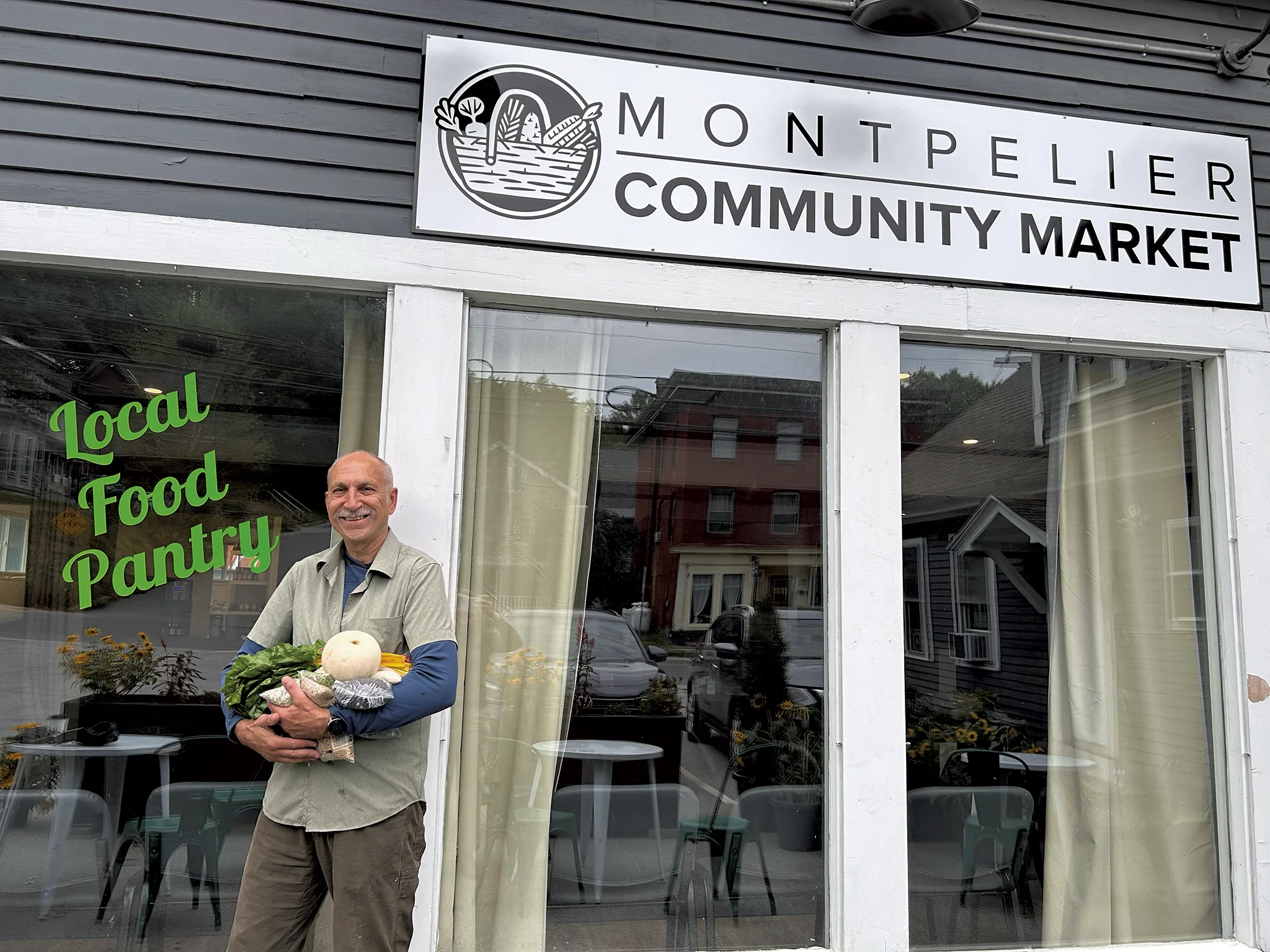
The Montpelier Community Market—a Vermont Foodbank partner—and the Central Vermont Refugee Action Network are working together, with support from you, to ensure that families have access to favorite, familiar foods in all seasons.
Rick has a long history in community service roles, especially working with people who are unhoused. Now, he’s serving as director of Montpelier Community Market of Just Basics, Inc., a role he calls “the fulfillment of my life’s work.”
This Foodbank partner, which sees up to 60 households on distribution days, has undergone big changes with Rick’s leadership. They’ve moved into a new location: a former restaurant with a glass front, spacious waiting area, parking, ample storage, and running water—which they once lacked. They’ve also changed their name from a “food pantry” to a “community market,” demonstrating a commitment to dignity and inclusion.
“We think of it as neighbors supporting each other… we wanted our name to reflect that,” says Rick.
The location’s spaciousness has helped a new community collaboration flourish. Since November 2025, the Market has teamed up with Central Vermont Refugee Action Network (CVRAN) to provide weekly boxes of culturally relevant foods for about 20 Afghan families.
The Market provides storage and distribution space. CVRAN’s team fills the boxes and coordinates pick up, supported by volunteers who know the families and can communicate with care.
The effort began in response to federal changes to the Supplemental Nutrition Assistance Program (SNAP), known in Vermont as 3SquaresVT. The changes caused many refugees to lose access to this benefit, which provides money for groceries each month and enables households to shop for preferred foods with autonomy.
“A partnership was born that just kept taking off,” says Rick.
The food boxes include common ingredients for Afghan dishes that the families identified as hard to obtain or expensive. Among these are halal chicken—the most challenging item to source—jasmine rice, red lentils, canned tomatoes, onions, and flour.
Improving access to preferred foods is an ongoing focus for the Market. Last year, they participated in a Foodbank-facilitated project to learn from neighbors about local needs and specific preferences. Honoring diverse preferences is core to the Foodbank’s values, and thanks to community collaboration and your support, families facing hunger are able to enjoy culturally familiar food with more dignity and ease.
“We’re getting a lot of food to families that have real challenges meeting their food and shelter needs,” says Rick. He adds that food box participants have become more comfortable shopping during the Market’s regular hours to round out their grocery basket.
The local co-op is a key sourcing partner, providing organic halal chicken at cost. Additional ingredients come from the Foodbank and other community organizations, farms, and gardens. Area businesses, like the bookstore, have run food drives for some items.
“We’re part of a very cool network of people who are trying to support each other and take care of each other,” says Rick. “And what could be better than that, you know? To be participating in that.”
“I’m a very lucky guy,” he reflects. “This is my community and I get to serve it in this very public and dynamic way … I know so many of the shoppers … I feel like I’m visiting with my friends.”
With the colder months ahead and the season of gatherings upon us, efforts like these—supported by donors like you—help neighbors access the food they like to cook, eat, and celebrate around. And as for Rick’s favorite seasonal comfort food? “It’s a no-brainer. It’s winter squash. In all its manifestations. And that includes savory and sweet.”
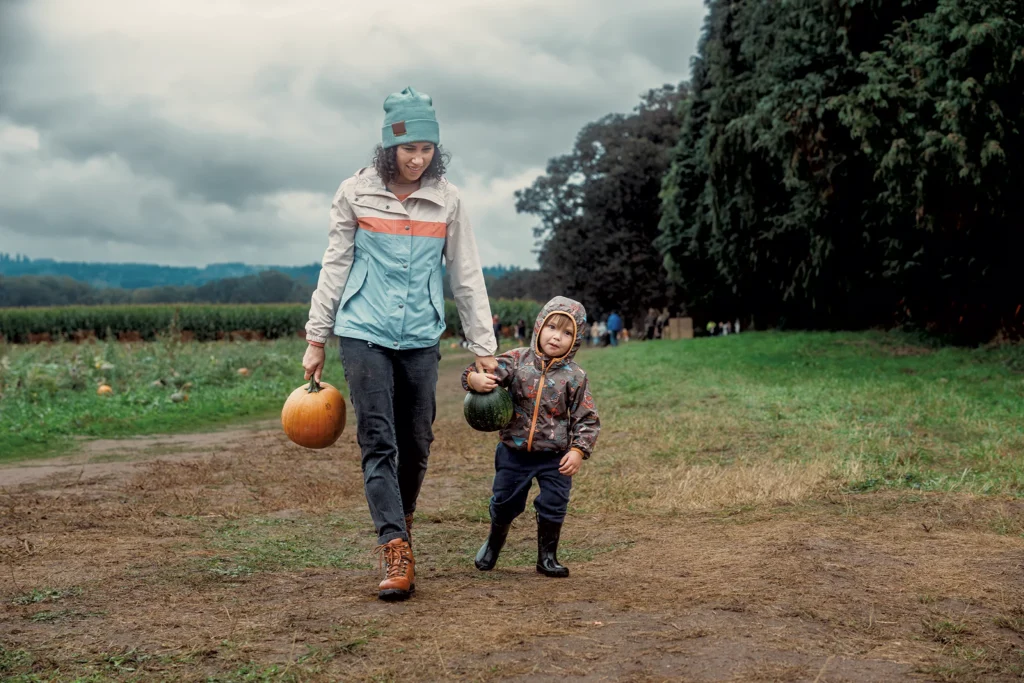
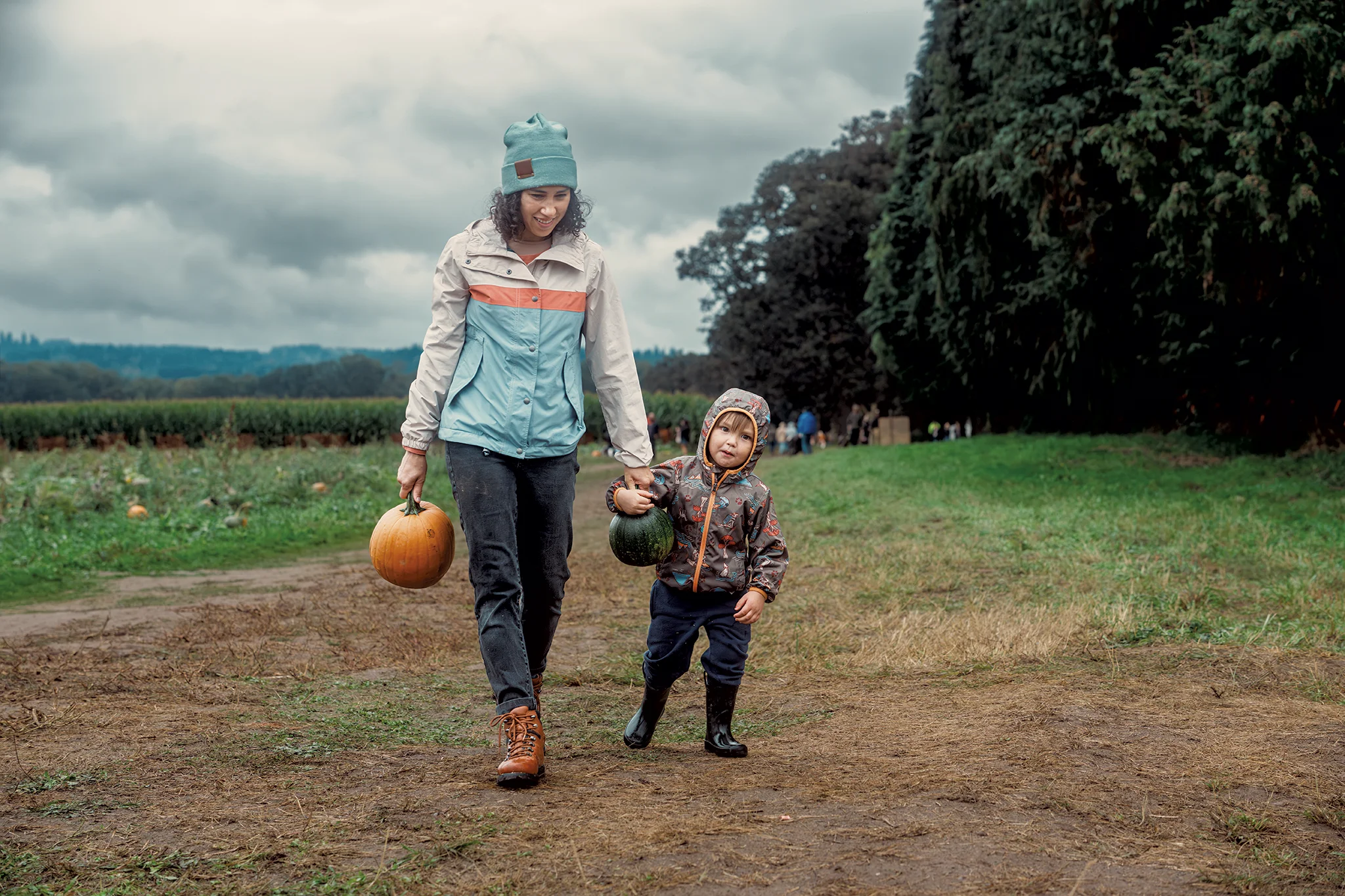
This issue of Kernels shares stories about how Vermont Foodbank, our network, and donors are helping neighbors weather these challenges, while centering dignity, inclusion, and meaningful community relationships.
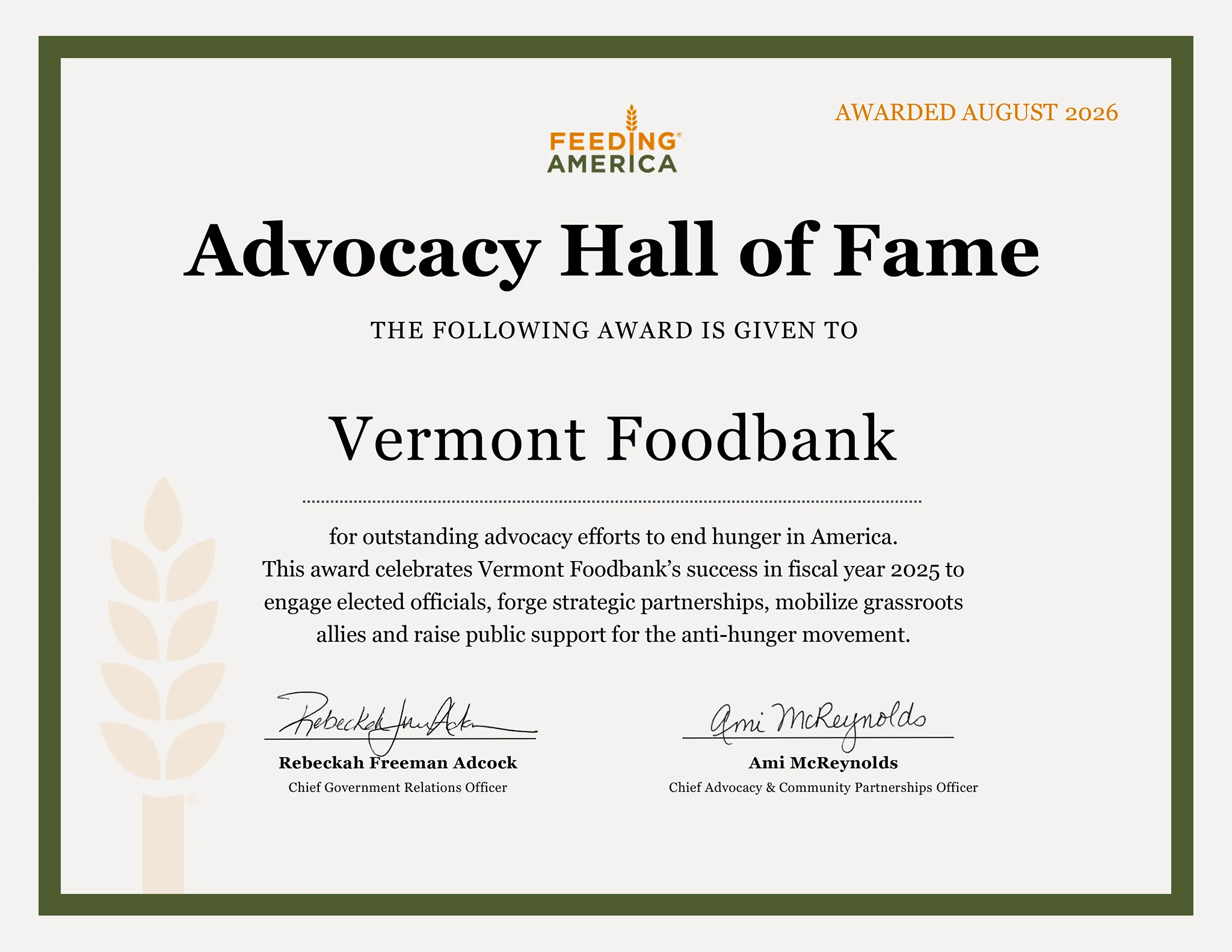
Hunger is solvable. Its causes include policy choices, economic conditions, and structural inequities. Vermont Foodbank is committed to helping change these factors so that everyone in Vermont has equitable access to enough nourishing food to thrive.
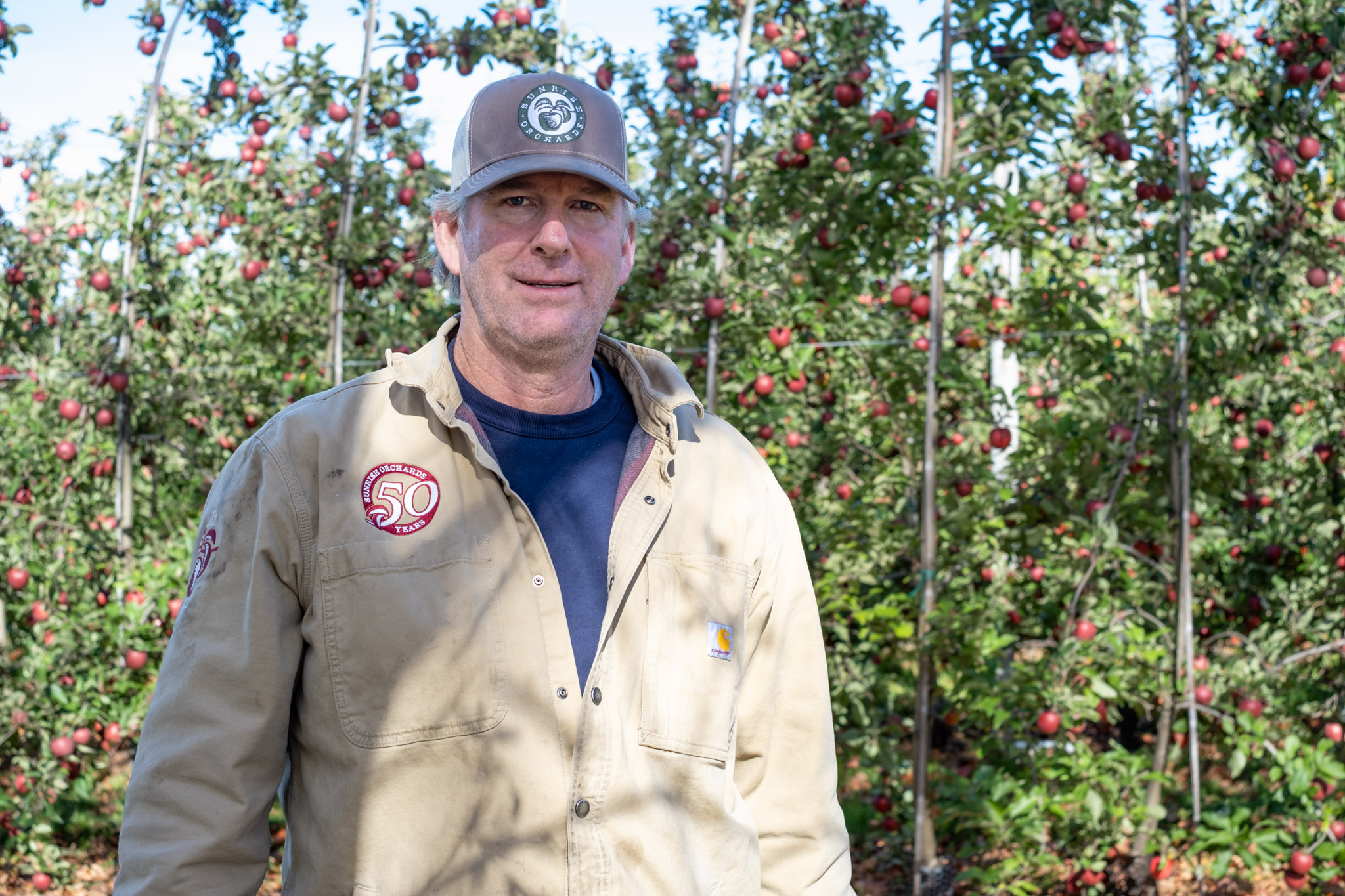
Barney and Chris are the owners of Sunrise Orchards, a family-run apple farm in Cornwall that became a Vermont Foodbank donor in 2025, when Barney reached out to offer the Foodbank more than 120 bushels of Paula Red apples, ensuring more neighbors could have access to the tasty autumn treat.