Forty years ago, Vermont Foodbank came to be. Today, it is Vermont’s largest hunger relief organization. But why was it created in the first place?
Why did Vermont establish a Foodbank in 1986?
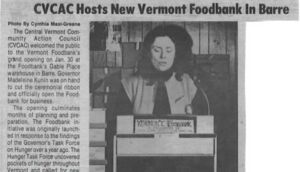
In 1985, Governor Madeline Kunin appointed a Governor’s Task Force on Poverty and Hunger to evaluate and combat hunger in Vermont. Around that time, the Central Vermont Community Action Council voiced a surging need for emergency food.
 But why did the Governor launch a task force, and what was causing the need for emergency food?
In the early 1980s, hunger in Vermont became more widespread and visible following population growth in the 1970s. The influx of people created more demand for housing, jobs and services. At the same time, a downturn in Vermont’s agricultural industry created hardship for many rural households.
These local challenges were compounded by shifts in the national landscape. The 1980-1982 recession led the Reagan Administration to tighten eligibility and benefit allotments for Food Stamps and other social programs. Congress responded by creating the Temporary Emergency Food Assistance Program (TEFAP) to distribute surplus agricultural commodities to states and charities. Many food banks formed across the country during this time, to collect and distribute TEFAP commodities.
Pressures of the national recession, cuts to federal support, and local needs were the backdrop of Governor Kunin’s Task Force on Hunger. In response to the needs and advocacy of people in Vermont, in 1986 Vermont Foodbank started as a program of Central Vermont Community Action Council (now Capstone Community Action) with help from the American Friends Service Committee and other local partners.
In its first operational year, Vermont Foodbank utilized an 1,800 square foot warehouse to distribute 145,000 pounds of donated food to a network of 43 partners. Nearly half are still partners today!
Once established, the work of Vermont Foodbank and food banks across the country shifted from temporary emergency response to a foundational, long-term strategy. Hunger became seen as a persistent social issue. In Vermont, the agricultural economy continued to struggle and the public became more aware of rural poverty. Vermont Foodbank was here to stay. It became an independent nonprofit organization in 1989, serving 69 Network Partners that year; and became a Certified Affiliate of Feeding America (then called Second Harvest) in 1994.
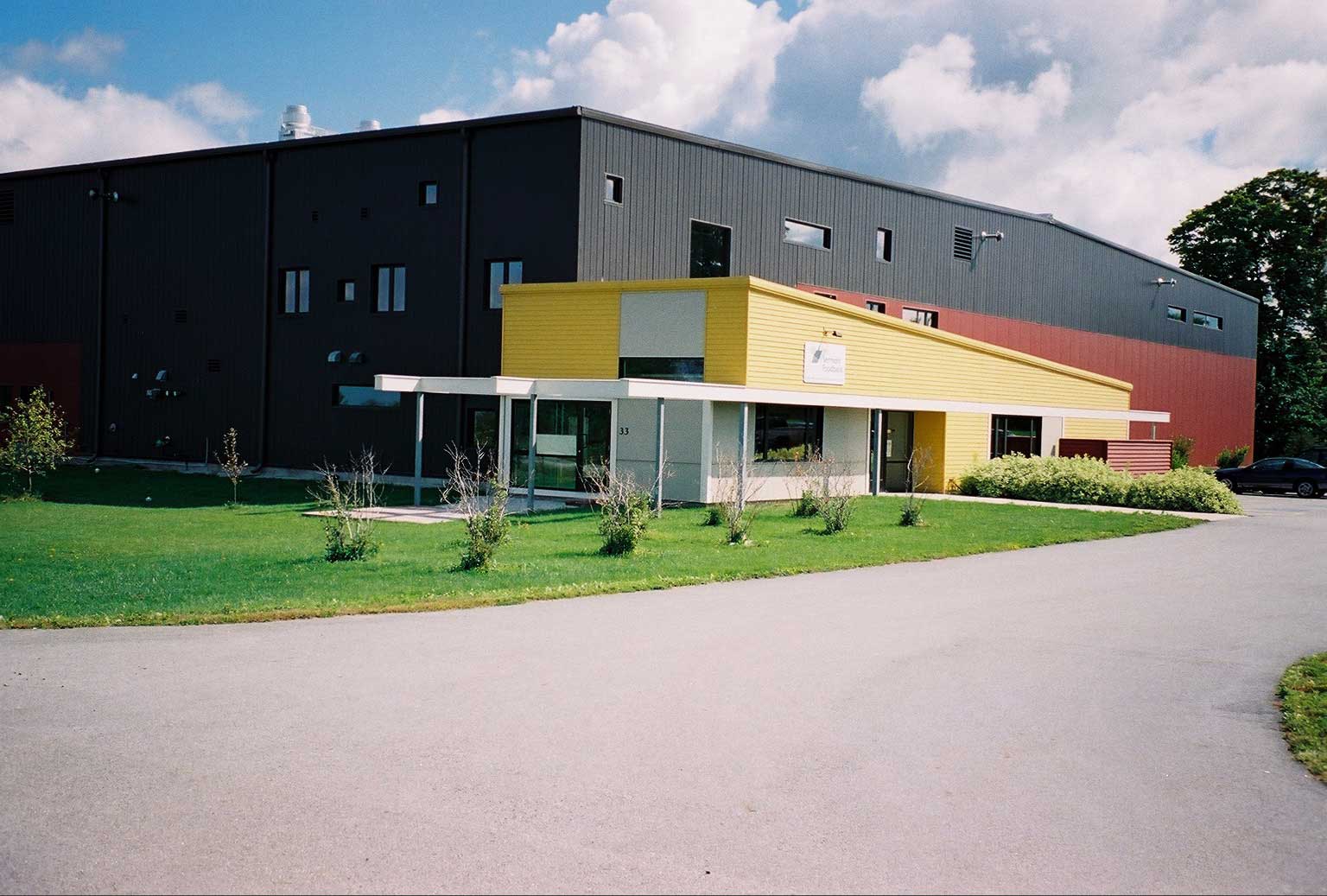
Today, Vermont Foodbank operates out of three distribution centers. The primary location is still in Barre; the organization moved to a 26,000 square foot facility in Wilson Industrial Park in 2000. It added a 22,000 square foot facility in 2009 in Brattleboro, and in 2014 established a 23,600 square foot distribution center in Rutland.
From Commodities to Fresh, Nourishing Food
In the early years, produce accounted for 1% of total food, and in 2007 the Foodbank began putting resources into produce: by 2018, 18% of distributed food was produce. Today, 50% of what Vermont Foodbank distributes is fresh food – produce, dairy, meats, prepared and perishable foods, and other protein such as eggs.
Our goal for the next 3 years is to maintain that ratio through programs including Fresh Rescue and Vermonters Feeding Vermonters:
- Fresh Rescue: Grocers direct food that is good to eat but unlikely to sell to Vermont Foodbank’s network of food shelves and meal sites. Fresh foods including produce, meat, dairy, bread and prepared foods get routed every morning from stores to a local food shelf for same-day distribution, or to a meal site for immediate use. In 2025, 170 retailers made 3.7 million pounds of fresh food available to the community through this program.
- Vermonters Feeding Vermonters: Vermont Foodbank purchases some produce directly from local farms; and provides grant funds to its network partners to purchase directly from their local farmers to serve people in their communities. Started in 2018, the program is approaching $10M in local purchases.
TEFAP is still an important source of USDA foods and accounts for approximately 15% of the 14 million pounds of food Vermont Foodbank distributes annually.
Is history repeating itself?
The Reagan Administration tightened eligibility and reduced benefits for food stamps through the Omnibus Budget Reconciliation Act of 1981. This law enacted a gross income test, changed deductions used to calculate benefits, adjusted benefit allotment factors including how cost-of-living was calculated, and enacted administrative changes that made participation more difficult – including increased reporting requirements.
Food stamp participation fell by about 1.8 million people between 1981 and 1982.
There are parallels between the Omnibus bill and changes to SNAP outlined in HR 1 (aka the ‘Big Beautiful Bill’ of 2025). While not the same, the two bills share outcomes of reduced participation and increased reliance on the charitable food system. Since HR 1 went into effect, approximately 5,000 people in Vermont have lost their SNAP (aka 3SquaresVT) benefits.
What is the next chapter for the Foodbank and food security in Vermont?
Food banks were created in response to federal changes in support and local needs. The future we are building toward is one without the daily emergency of food insecurity for people in Vermont.
For nearly 20 years, Vermont Foodbank has invested effort into state and national policies that support a food-secure future. In 2024, it became a member and fiscal sponsor of the Vermont Food Security Coalition, whose vision is to end hunger, ensure viable farms, build climate resilience, and secure a just, sustainable future for all. Together with six other coalition members and over 60 organizations as allies, Vermont Foodbank is helping implement the Vermont Food Security Roadmap to 2035.
Vermont Foodbank believes food is a human right, and there is enough food to eliminate hunger.
September is Hunger Action Month. Join the cause today.
Give | Advocate | Volunteer
This article was researched with support from Microsoft Copilot. Sources:
Argosy Foundation
Factually
The Hunger Museum
Vermont Business Magazine
Vermont Foodbank archives
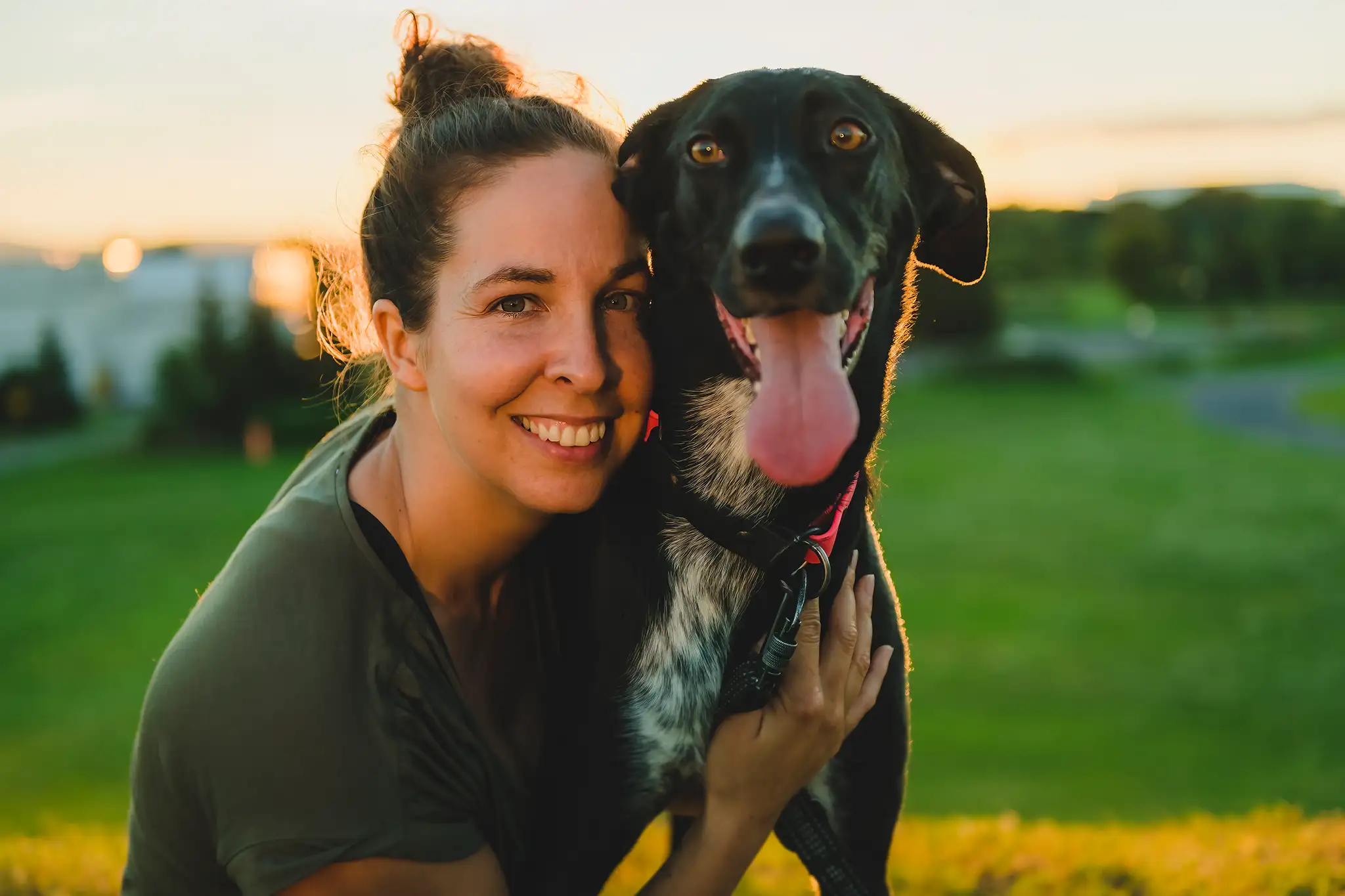
When an injury left Emma out of work without medical leave, she needed help affording groceries—so she got in touch with Vermont Foodbank. Now, Emma’s giving back and sharing her experience to make sure people are aware that food help is available when someone needs it.
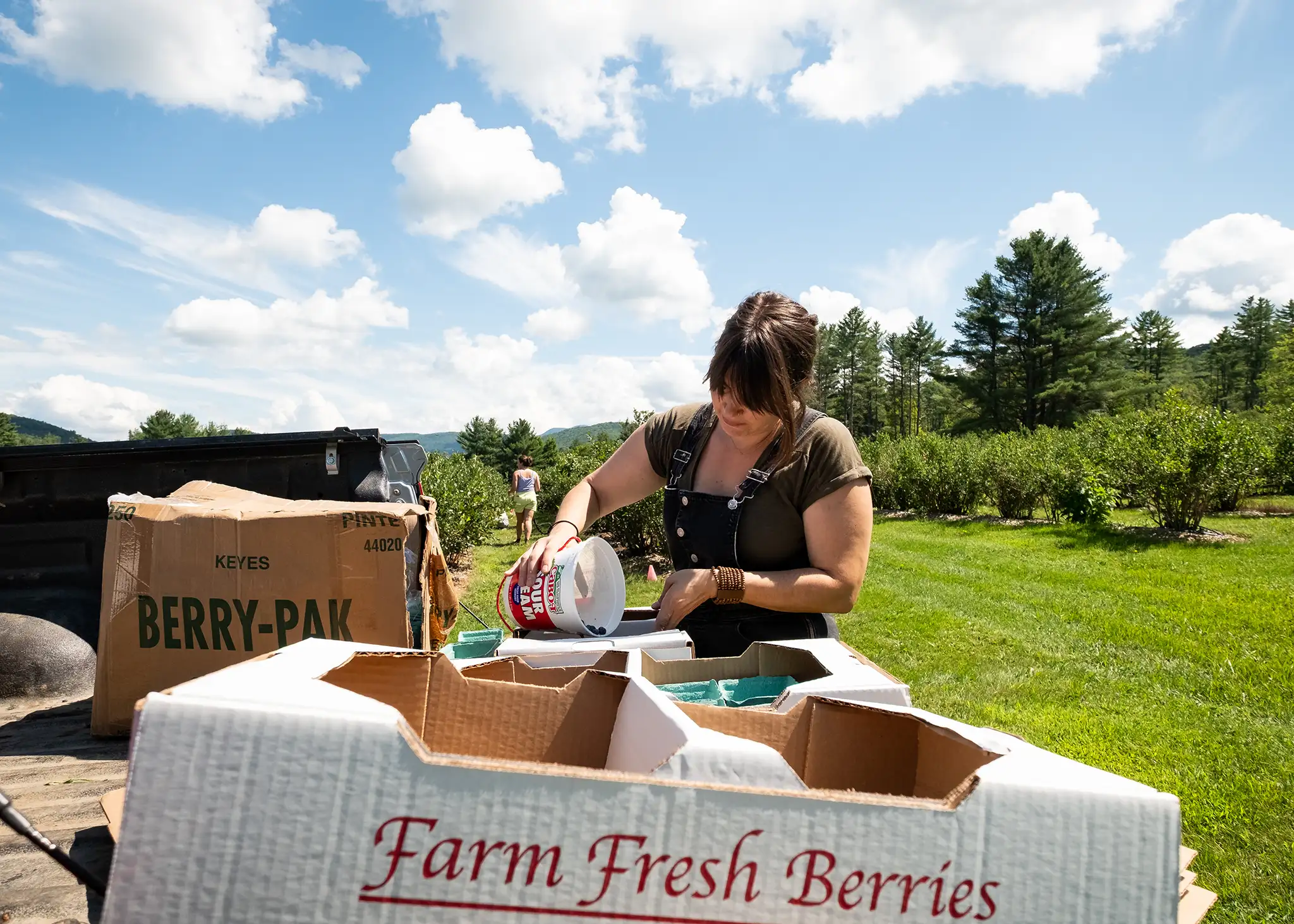
Vermont’s farms and gardens are finally bursting with fresh, ripe fruits and veggies and our latest edition of Kernels is here too, freshly picked.
Vermont Foodbank is proud to join Vermont Civic Connect this election year, a new initiative from the Vermont Secretary of State's Office. Learn why we believe informed civic participation helps build stronger communities and supports our vision of a food-secure Vermont.