Food insecurity is an experience that touches many of us over the course of our lives. In order to build a Vermont where food insecurity is no longer a daily reality, the people closest to this experience must be part of shaping the solutions. By listening to and partnering with neighbors who have experienced hunger, we better understand community needs, develop stronger solutions, and move closer to a food-secure future.
This commitment is built into our values of dignity, inclusion, partnership and accountability, and woven throughout our work. We aim to ensure that community members who are most impacted by hunger have meaningful opportunities to share perspectives and ideas and be part of decision-making processes.
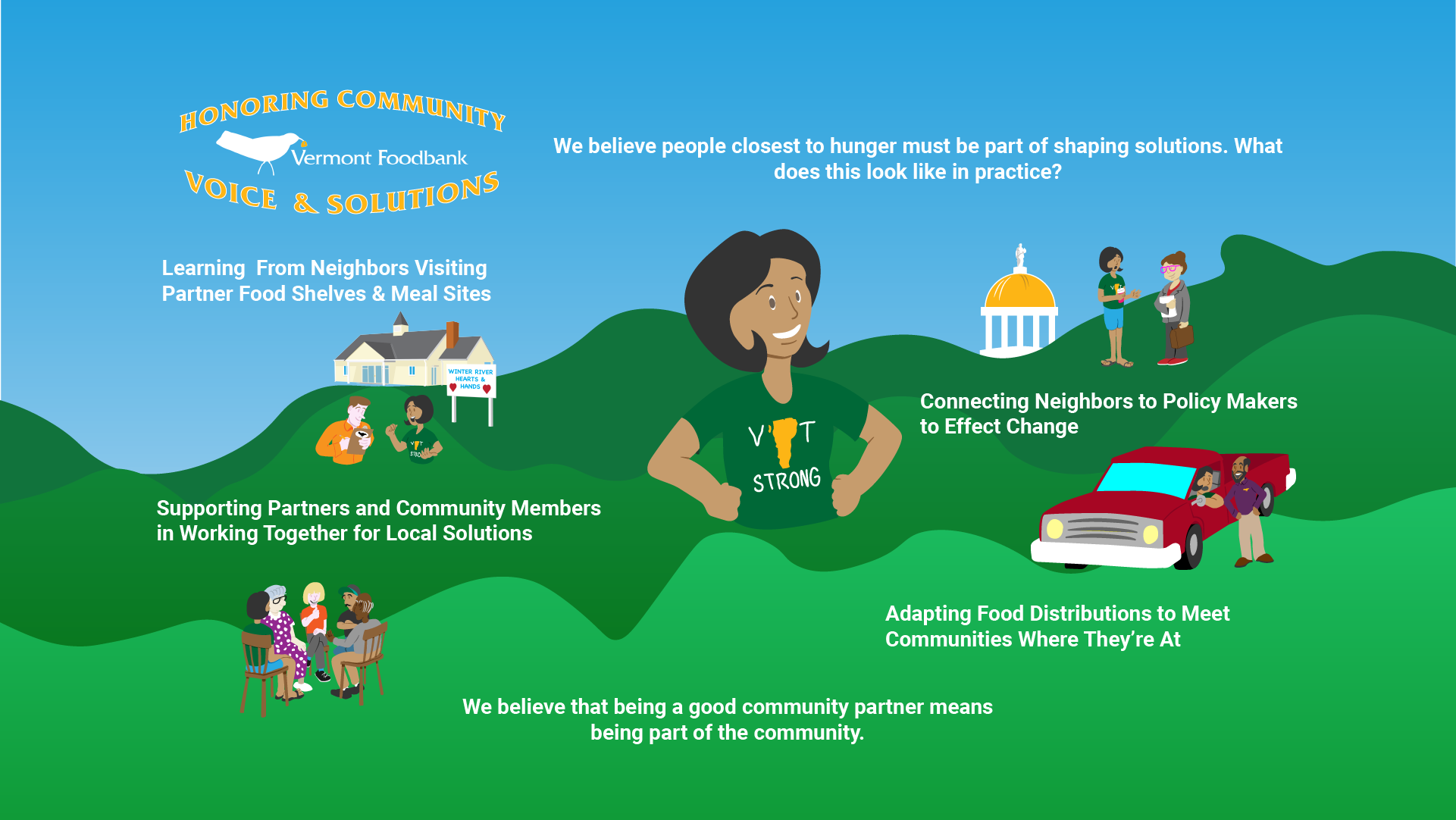
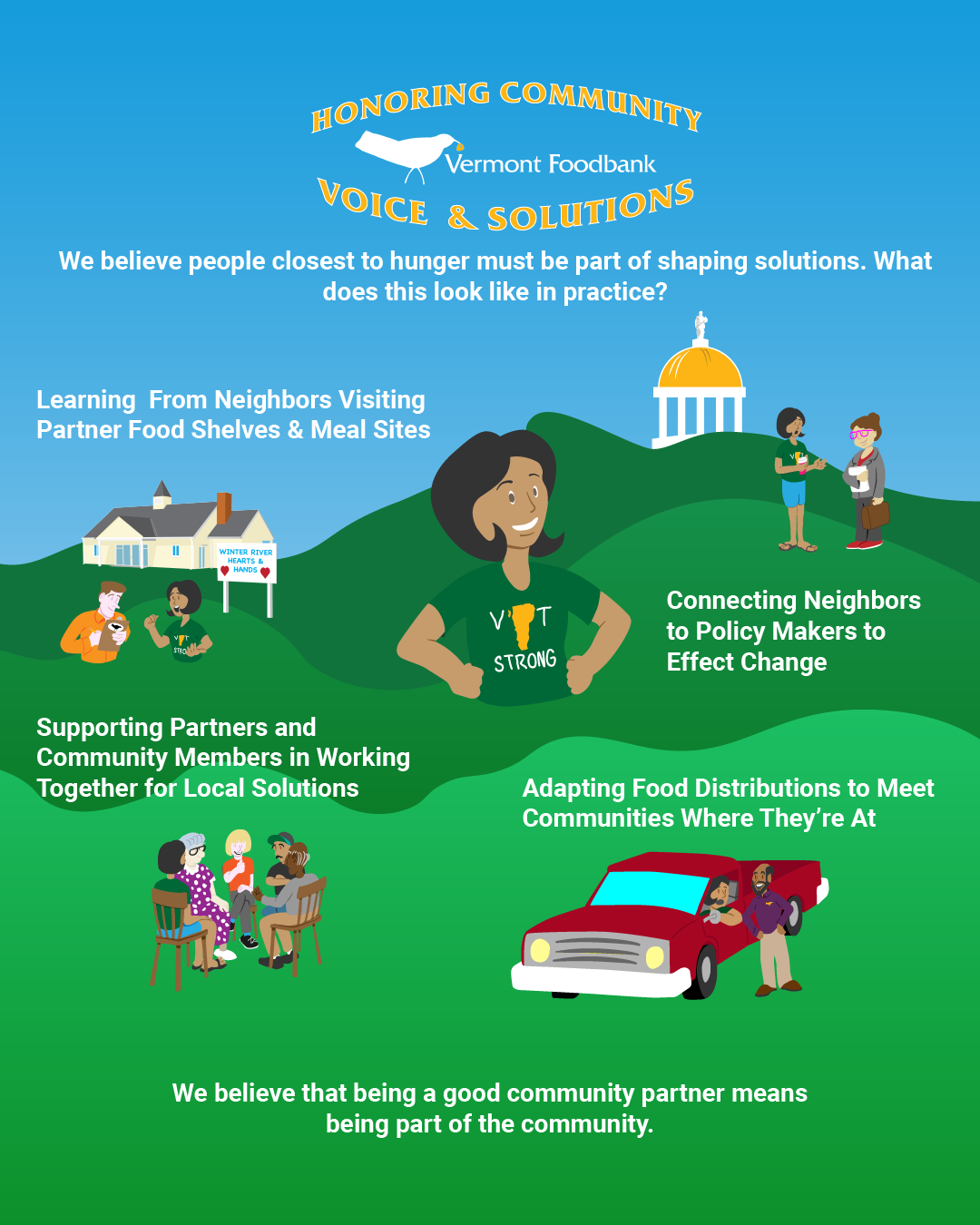
What does this look like in practice?
- The places where we and our partners distribute food are also places where we build community and learn from one another. We, and our partners, incorporate community ideas and perspectives into our planning, so our efforts best serve local needs and meet communities where they are at. One partner, Hardwick Area Food Pantry, says: “Our pantries provide both nourishment and a place where people feel seen and respected … isolation and hardship often accompany food insecurity, and we work to make our pantries a place of connection and trust.”
- Creating a food-secure Vermont requires policy change. For this to come about, many people must raise their voices, share their experiences, and tell elected officials what they need. We join together with community members in advocating for changes, and help community members connect with local, state, and national leaders, so their voices and expertise can be heard in policy-making processes. As part of this, we offer training on how to talk to legislators and how to navigate the State House. Learn more in the eighth post in this series.
- We support food access partners in working together with community members to strengthen programming and build trust. We offer guidance on hosting community conversations, and on integrating neighbors’ insights to meet community-identified needs—like improved access to culturally relevant foods and to fresh, local foods.
- We reflect these commitments in our internal governance, too: our board of directors includes members with lived experience of food insecurity.
These efforts build on lessons learned over our 40 years of operations, and during specific projects carried out between 2022 and 2024. These included a series of community conversations, as well as four pilot initiatives that embedded community expertise into their model.
Visit our blog to read about Marian and Paul Joseph, two community members who participated in community conversations in Vergennes as community consultants, and the food access solutions that resulted. “I know when Paul and I come home from our meetings with [the Foodbank], just being there talking with people…our whole attitude changes,” says Marian.
Community is at the heart of all that we do, every day. Listening to and partnering with our neighbors is key to achieving the vision of a food-secure Vermont. In the final post in this series, we’ll share more about how you are already a part of this community—and additional ways you can get involved.
 Collaborating for Food Security