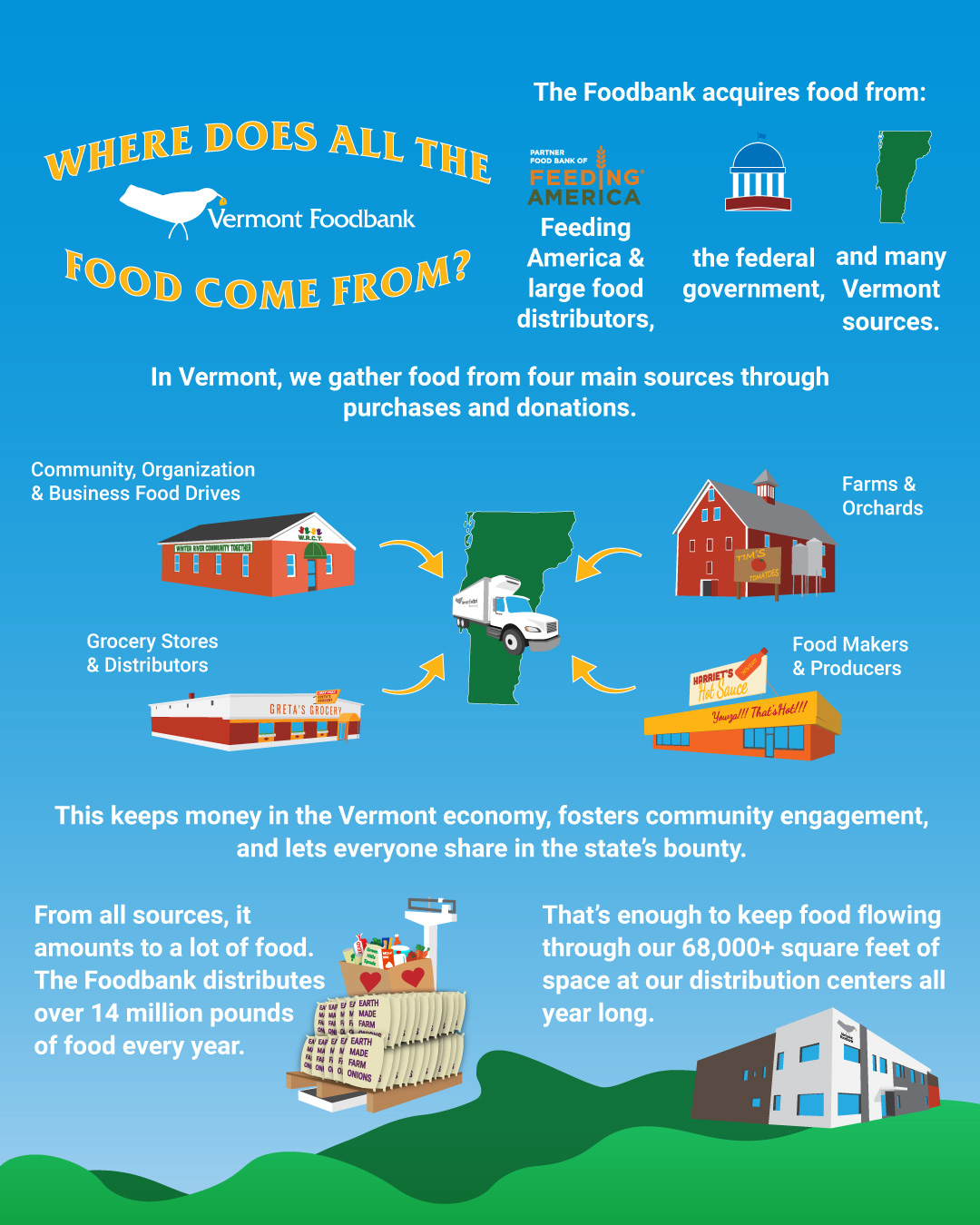
Vermont Foodbank distributes more than 14 million pounds of food each year, so that neighbors across the state can have a reliable, year-round supply of nourishing food available when they need some help.
So, where does all the food come from?
- The Feeding America network: As a member of the national Feeding America network, we have access to both donated and low-cost staple foods and connections to national grocery chains, distributors, and producers.
- U.S. Department of Agriculture (USDA) programs: We receive food through the USDA’s TEFAP (The Emergency Food Assistance Program) and CSFP (Commodity Supplemental Food Program). These foods arrive with specific eligibility and distribution guidelines.
- Local Vermont food sources: Sourcing food locally keeps dollars in the state, strengthens community engagement in the work to end hunger, and helps everyone share in Vermont’s bounty. We gather food from four main Vermont‑based sources, through a mix of purchases and donations:
- Grocery stores and distributors
- Farms and orchards
- Food makers and producers
- Community food drives (organized by individuals, groups, and businesses)
We are so grateful for all of our sourcing partnerships—and especially the local ones—that allow us to fill our 68,000+ square feet of warehouse space at our distribution centers and send food back out to our communities every day.
Download an accessible PDF of this infographic.
Up next: Learn more about the journey of food as it flows into and out of our distribution centers.