In the last post in this series, you learned about the types of partners Vermont Foodbank works with to share food. In the sixth post in this series, you’ll learn more about how these partnerships get food to communities around the state—and how you and your neighbors can find resources near you. Here are five ways:
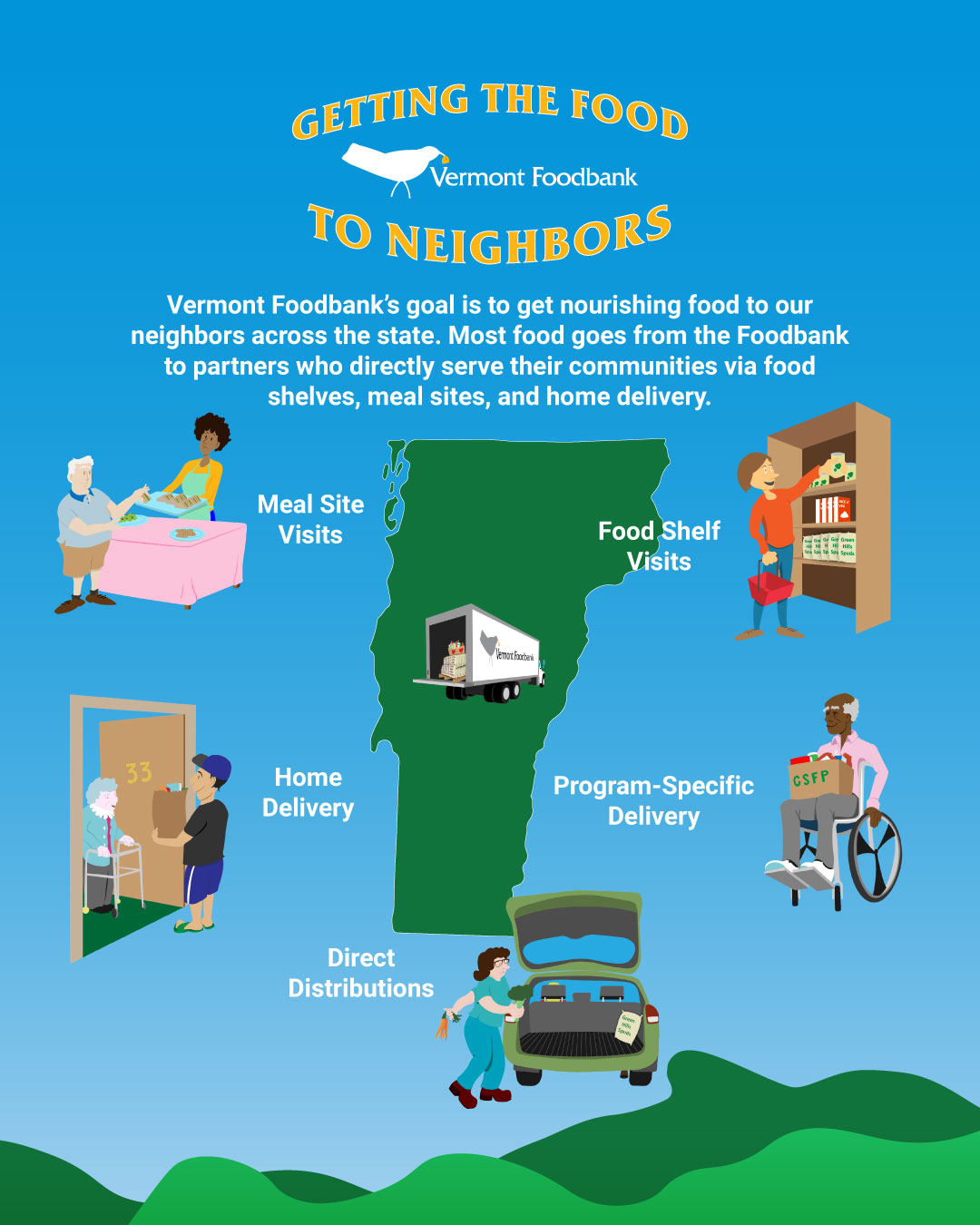
- Meal Site Visits: Meal sites are places where community members can come for a prepared meal and connection with others. Some meal sites are part of larger organizations like senior centers, childcare centers, or shelters and are for people using these programs. Some sites offer to-go meal options, frozen meals, or home delivery such as through Meals on Wheels. Meal sites open to the public often post their menus in advance on websites or social media pages. You can learn about locations, hours, and any eligibility requirements for meal sites near you by searching here or by calling 2-1-1.
- Food Shelf Visits: Food shelves are places where community members can come to shop for free foods. Almost every community has a local food shelf. They can be located in many types of places and operate in different ways. For example, EJU Food Shelf in Jericho is a monthly drive-up, while HOPE in Middlebury’s food shelf looks and feels like a small grocery store, complete with glass-front refrigerators for eggs and protein. Onion River Food Shelf is located in the town building, Bethel Area Food Shelf is in a church, and BROC’s food shelf is part of a community action agency. Like meal sites, many food shelves are open to anyone in the community, while some, like school pantries, are for specific communities. If you or a neighbor are seeking some grocery help, head here to find your nearest food shelf.
- Program-Specific Delivery: Income-eligible adults age 60 or older can participate in the Commodity Supplemental Food Program (CSFP), a federal government program that provides a free box of staple foods each month. Vermont Foodbank staff help people enroll, Foodbank volunteers pack the boxes, and Foodbank drivers deliver them. Learn more here about how CSFP can help you save money on groceries and how to apply, here.
- Home Delivery: Vermont Foodbank works with housing partners through a program called Support and Services at Home (SASH) to deliver food directly to people in their homes, at no cost. SASH helps older adults with limited income and transportation barriers remain independent in their homes and stay well-nourished. Some of our food shelf partners also offer a home delivery option for people who face barriers to coming in person to shop; you can check in with your local food shelf to find out if this is an option where you live.
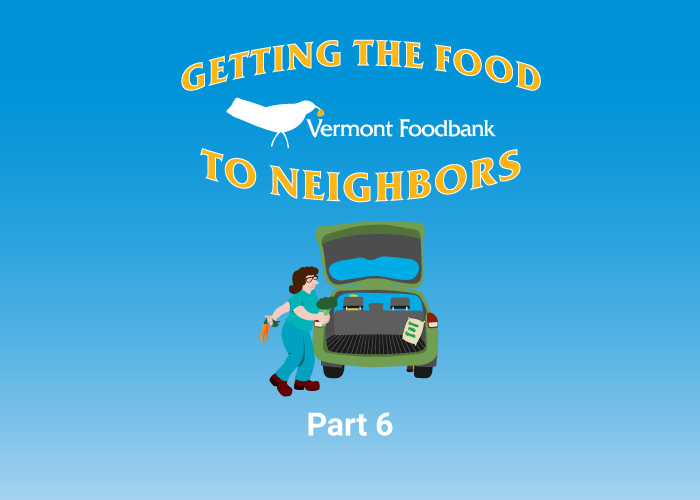
- Direct Distributions: Vermont Foodbank holds events to share fresh produce directly with community members. Schools and healthcare partners serve as hosts and determine whether their event is open to the public or limited to their clients. Either way, direct distributions are a way to distribute perishable food on a short timeline. At these distributions, neighbors come in cars and Foodbank staff and volunteers load them with bags of fresh produce—and sometimes other foods, too. Learn more about these distributions on our website.
Download this infographic as an accessible PDF.
This list does not represent all the different ways that people in Vermont can get needed food resources. In addition to Vermont Foodbank and our partners, there are many other types of community organizations and programs, big and small, that support food access in our state. Learn about additional resources in Vermont here.