The State Legislative Session is over….for now. Legislators will be back for a veto session and more work on the education reform bill. At this time, there are no food security bills on the veto list! Here is the incredible progress we made together this year. From food access to farms to protecting school meals, our work will make a difference for neighbors across Vermont.
- Universal School Meals were protected: After the Governor threatened to repeal the Universal School Meals law earlier this session, our community of parents, teachers, students, farmers, and more stepped up to say that we would not accept this. Our message was heard, loud and clear. The Vermont Legislature protected Universal School Meals, largely thanks to your advocacy! Vermont students will continue to be able to count on breakfast and lunch, at no cost, every day in school.
- The Vermonters Feeding Vermonters grant program passed and is now law! This means that instead of returning to ask the Legislature for funding each year, this funding can be included as part of the administration’s annual budget within the Vermont Agency of Agriculture, Food and Markets.
Funding to Support Food and Food Access in the FY26 State Budget
All of the items in the list below are part of the slate of requests from the Food Security Roadmap Coalition.
- Vermont Foodbank’s Vermonters Feeding Vermonters program was funded at $500,000 to support neighbors and Vermont farms.
- Vermont Foodbank received $1 million to support food purchases for our network of partners to distribute across the state.
- NOFA-VT’s Crop Cash and Farm Share Programs were funded at $450,000. These programs help Vermonters access fresh foods at their farmers markets and through Community Supported Agriculture (CSA) programs.
- The Land Access and Opportunity Board was funded at $1.63 million to continue their critical work to improve land and housing access among historically marginalized or disadvantaged communities.
- The Legislature recognized the importance of the 2-1-1 program, which helps connect Vermonters to state resources, by making the full funding of this resource permanent. Now, instead of fighting for funding year after year, 2-1-1 can fully focus on serving Vermonters and connecting them to essential resources.
- The Legislature expanded and increased the accessibility of the Vermont Earned Income Tax Credit and Child Tax Credit, which will boost economic security for eligible Vermonters.
- The Administration of the Child and Adult Care Food Program (CACFP) was funded at $150k to support the organizations doing this work in continuing to feed children and adults in care settings.
There were a few items that we, and our food security partners, will continue to work on in the next year of the biennium because they did not pass this session:
- Restaurant Meals Program
- Farm Security Fund
- Funding for responsive readiness for emergencies – Vermont Foodbank will continue to work toward a state partnership to support our partners and neighbors in emergencies and disasters.
Thank you for your continued partnership in advocating for food security for our neighbors in Vermont. It takes all of us together to make the change that is needed to ensure that everyone has enough nourishing food every day. We are so glad to do this work with you!


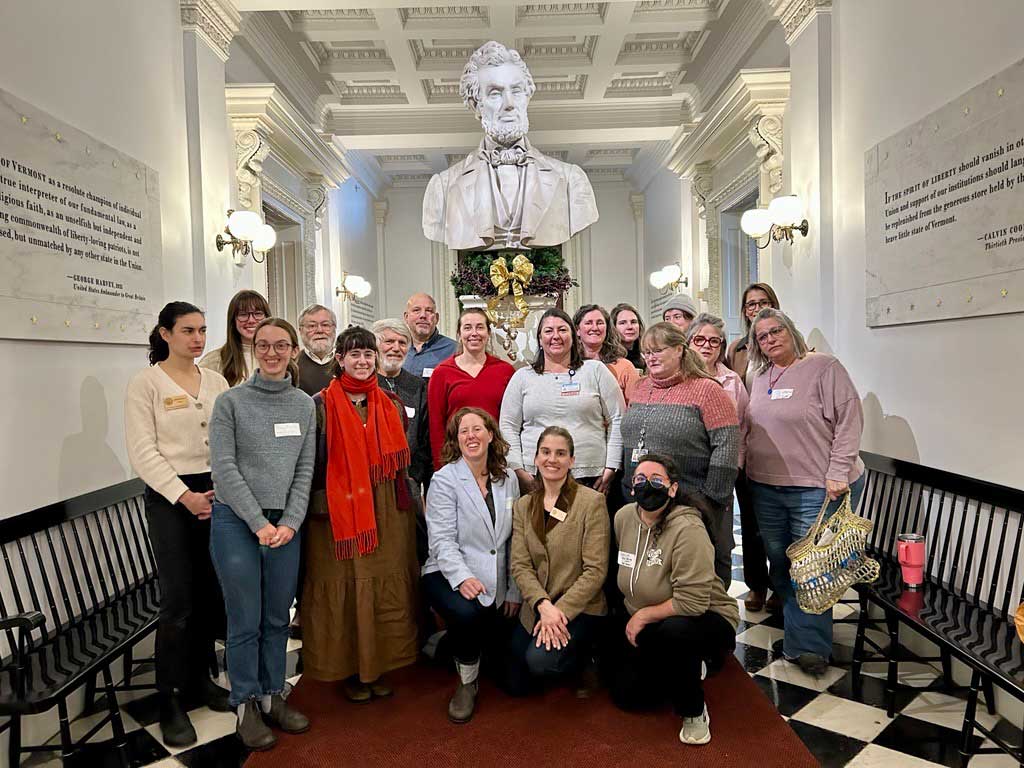
The 2026 Legislative Session, and second and final year of the 2025-2026 biennium, came to a close last Friday, May 29. There were a lot of ups, some downs, and many bills passed just before the deadline. We saw an increased awareness of food security, with some surprising champions stepping forward!

Food insecurity is a solvable problem. While the bulk of the Foodbank’s work is distributing nourishing food every day, the team is also working at addressing hunger by advocating for policies that can ultimately end hunger.

It has been a busy few weeks in Montpelier and we've now crossed the mid-point of the Vermont state legislative session, called “crossover” under the golden dome in Montpelier.