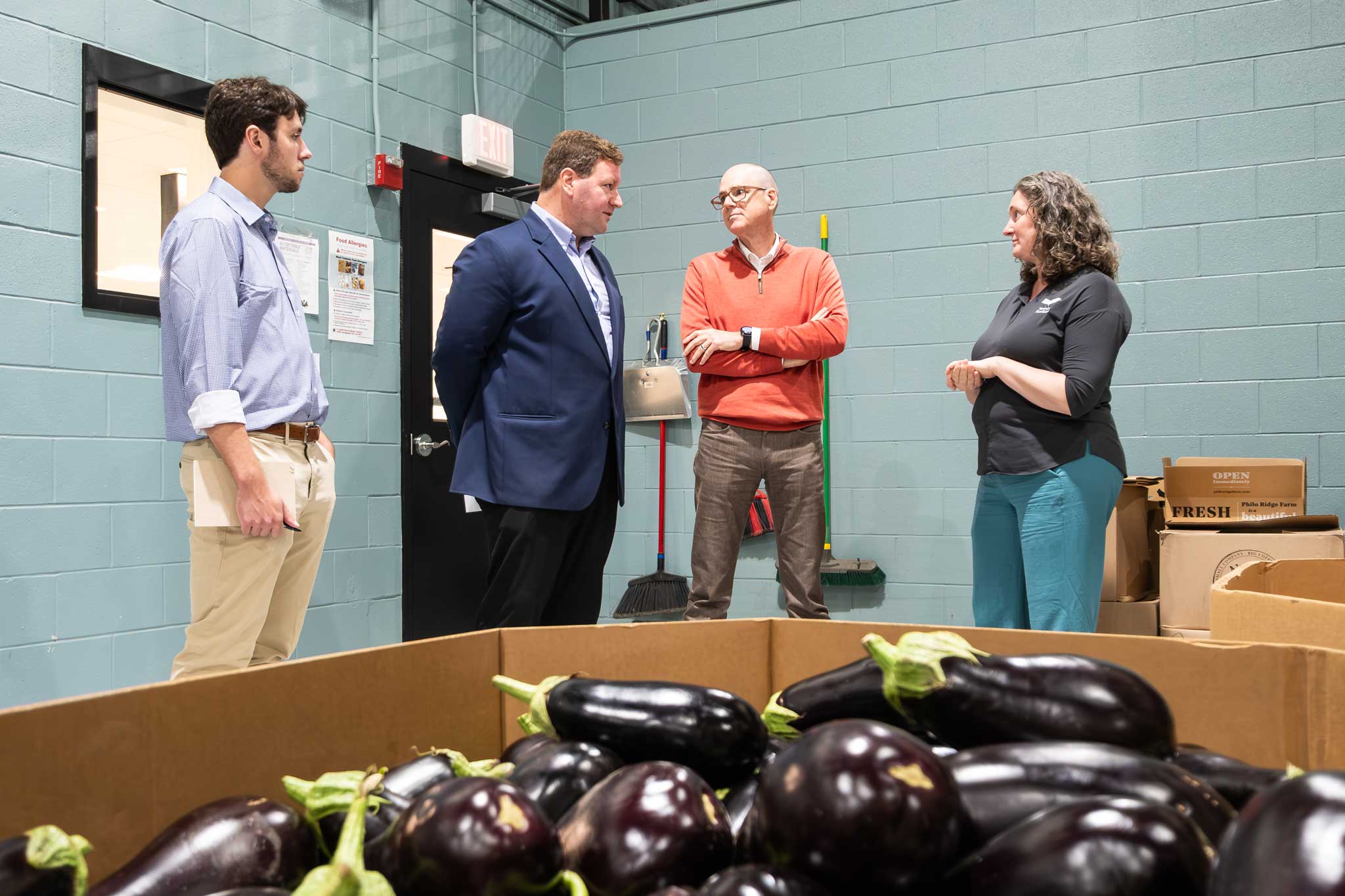
Vermont’s State Treasurer doesn’t typically hit the road to hand out checks to nonprofits around the state, but on Tuesday, Mike Pieciak climbed Quarry Hill in Barre to stop in at Vermont Foodbank’s distribution center.
“I’m here today with John Sayles at the Vermont Foodbank,” Treasurer Pieciak said while presenting a check to the Foodbank’s CEO. “We are coming because earlier this week it was national non-profit day. We wanted to look at our unclaimed property warehouse and see if we had any unclaimed property for really important non-profits in our community, and we did find a check for the Vermont Foodbank.”
While Treasurer Pieciak was there to drop off the unclaimed property check for just over $1,000, he took the opportunity to connect with Foodbank staff, tour the facility, and learn about the issues many people in Vermont are facing when it comes to putting food on the table. And in the wake of the recently signed federal Budget Reconciliation Bill, one topic that surfaced was the impact it will have on 3SquaresVT (the Vermont name for SNAP).
“October first is the first impact on SNAP beneficiaries, right? And that’s real, that’s real,” Treasurer Pieciak said while speaking about the cuts to federal food programs. Senior Manager of Government and Public Affairs Carrie Stahler at the Foodbank affirmed that impacts had not yet been messaged to the public and many people are feeling confused by the federal bill and its impact on Vermont, but that the earliest impacts could come as soon as October 1.
The Treasurer expressed surprise at the estimated number of people in Vermont who will be impacted – staff members in Senator Welch’s office estimate that more than 6000 people in Vermont are at risk of losing some or all of their Supplemental Nutrition Assistance Program (SNAP) assistance, known as 3Squares in Vermont. The average family in Vermont that relies on food assistance will lose $94 every month.
“I had heard some numbers in the hundreds, but not that high,” observed the Treasurer.
This data was recently shared by Senator Peter Welch at a press conference in Barre.
Over the course of the roughly hour-long visit Sayles and Stahler gave the Treasurer a tour of the facility, walking him through the day-to-day operations that keep food flowing to the over 200 partner organizations the Foodbank works with to get food into Vermont communities.
Walking through the warehouse amidst pallets of shelf-stable food and pallet boxes full of fresh eggplant and sweet corn, the Treasurer heard about the Foodbank’s needs in relation to responsive readiness and how the state can support those efforts. In addition, he also heard of the state’s ongoing support for Vermonters Feeding Vermonters, a Foodbank program in which the Foodbank purchases fresh produce directly from Vermont farms for distribution throughout the state.
The Foodbank and partners are grateful for the support received in last year’s state budget – $500,000 for Vermonters Feeding Vermonters and $1 million to support food purchasing – but Sayles and Stahler informed Treasure Pieciak of a reality that he is already familiar with: the gutting of SNAP and Medicaid, and the pressures from climate-related natural disasters, have already, and will continue to, make it more difficult for neighbors to meet their basic needs, including accessing nourishing food. As a result the Foodbank will require increased state investment to sustain the current level of support offered neighbors across Vermont. And that support, Sayles said, will be important for moving ahead with Food Security in Vermont: Roadmap to 2035, a collaborative effort of numerous organizations to solve some of these issues.
“The coalition includes partners from across the food and agriculture systems to create collaboration and mutual support for the whole food system, and neighbors experiencing food insecurity. These partners, The Sustainable Jobs Fund, Hunger Free Vermont, the Foodbank, NOFA, the Intervale Center, Feeding the Valley Alliance, and Land Access and Opportunity Board, have a ten-year plan to create a food-secure Vermont,” Sayles said. “We’re really trying to build and grow the coalition so that there’s more of a ‘we’ effort, you know, we can be in the legislature with arms locked saying ‘it’s not support for food access OR agriculture, we have to have them both.’”
Treasurer Pieciak knows that in a political climate such as the current one, there’s truth in the adage that every little bit helps. The $1000 in unclaimed property delivered by the Treasurer will go to great use purchasing food people in Vermont need and want.
“Nonprofits like the Vermont Foodbank are a lifeline for our communities and economy—helping families put food on the table and lifting Vermonters out of poverty,” said Treasurer Pieciak. “As the Trump administration cruelly takes away funding that these organizations rely on, I am proud we can return these dollars that will make a difference in peoples’ lives.”

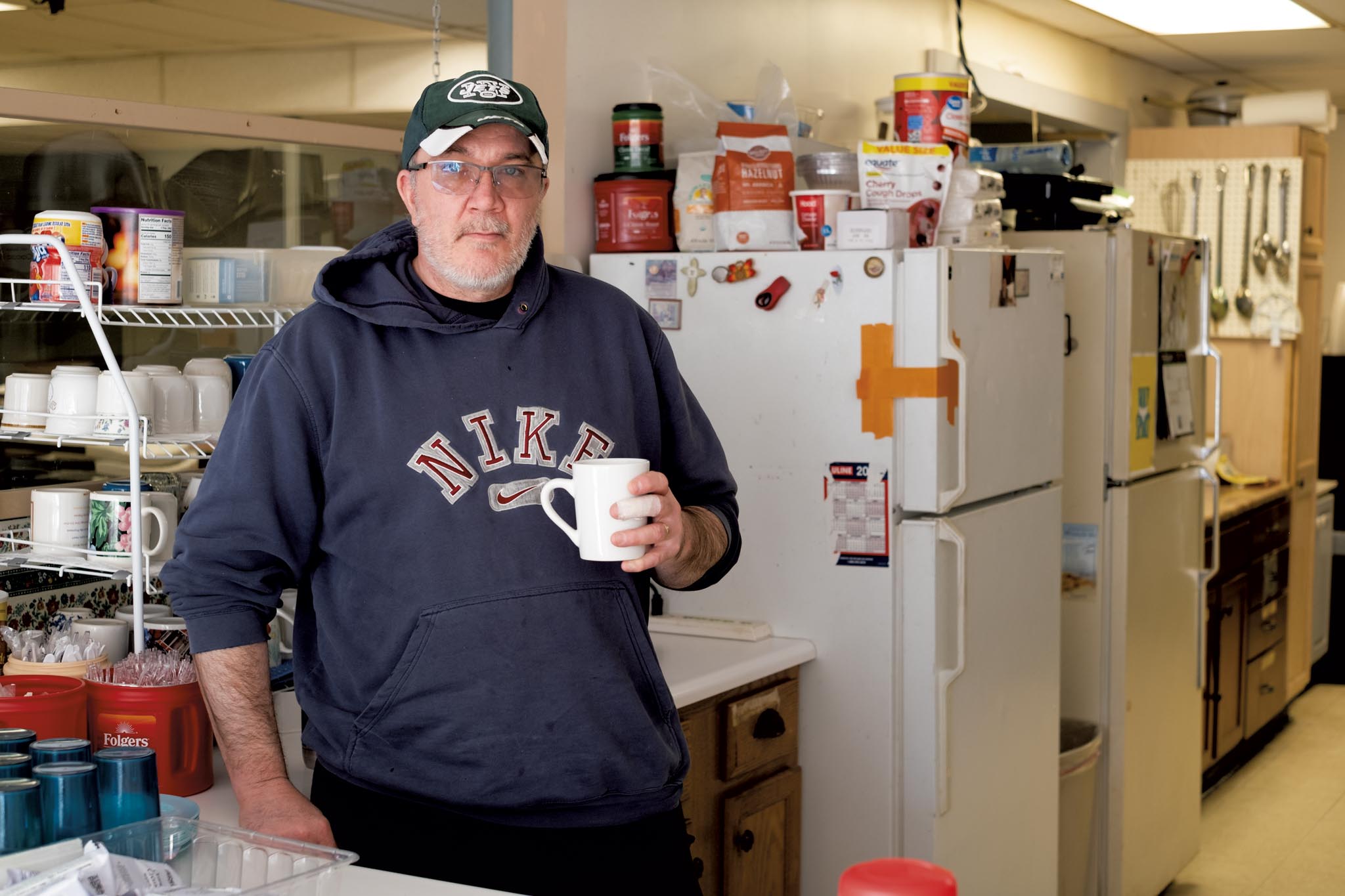
Having been on the receiving end of help himself over the years, Michael, the cook at Mustard Seed in St. Johnsbury is giving back by making sure his neighbors have a nourishing meal and a warm place to chat.
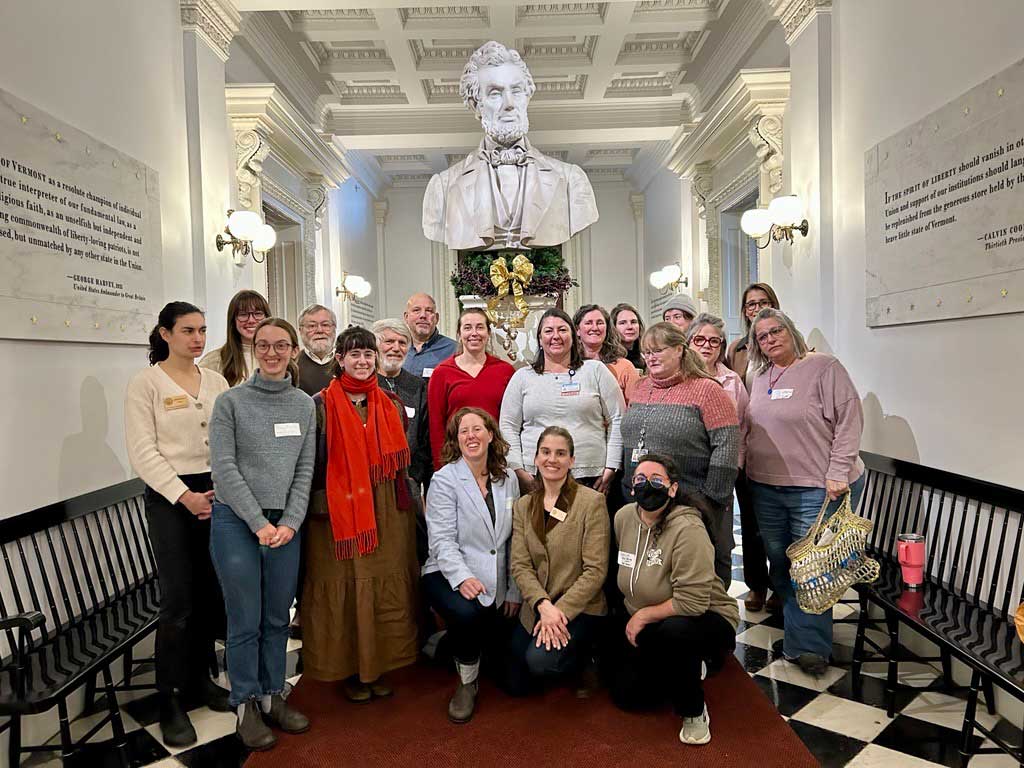
The 2026 Legislative Session, and second and final year of the 2025-2026 biennium, came to a close last Friday, May 29. There were a lot of ups, some downs, and many bills passed just before the deadline. We saw an increased awareness of food security, with some surprising champions stepping forward!
“Summer often is one of the hungriest times of the year for families with school-age children.” This is the opening line of a new national report on summer meals published by the Food & Research Action Center (FRAC).